Serving All of Los Angeles County · Youth Through NFL

Sports Training Los Angeles

Speed Training

Speed is trainable. Sports Training Los Angeles builds sprint mechanics from the ground up — acceleration, top-end velocity, and the deceleration control that keeps speed usable instead of reckless.

Programs are individualized by age, sport, and current mechanics, with progress tracked through periodic timed testing rather than guesswork.

Why Real Speed Coaching Matters

Why Generic Sprint Workouts Don't Work

A search for speed training near me turns up plenty of generic conditioning classes that mix in some sprints. That's not speed training — it's conditioning with extra steps. Real speed development requires isolating and coaching the specific mechanical phases of a sprint: the start, the drive phase, and top-end mechanics, each trained deliberately rather than lumped into one undifferentiated "go run" session.

The Three Phases We Actually Train

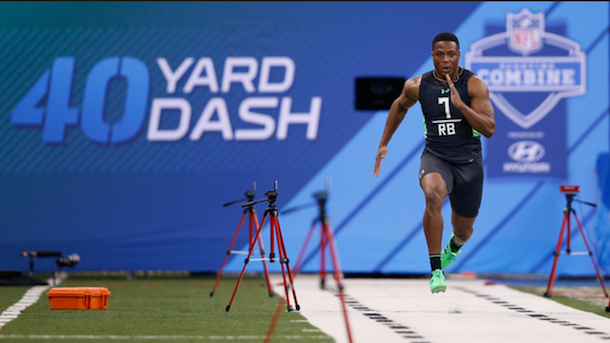
Acceleration mechanics (the first 5 to 10 steps), top-end speed (stride length and frequency once upright), and deceleration control (stopping and redirecting safely) are each coached as distinct skills. Athletes searching for 40-yard dash training, sprint mechanics coaching, or acceleration training in Los Angeles are looking for exactly this level of specificity — and it's what separates real speed coaching from a track workout with a coach standing nearby.

Testing Removes the Guesswork

Every athlete gets a real baseline — timed sprints over consistent distances, with the same methodology used for every retest. This is what makes the difference between "I feel faster" and a number an athlete can put on a recruiting profile or a parent can point to as proof the training is working.

Who Trains Speed Here

Speed training serves a wide range of athletes, each with a different goal, but the same standard of individualized, tested coaching.

Youth Athletes Building a Foundation

Young athletes learn proper running mechanics early — shin angle, arm drive, ground contact — before bad habits set in. This is the age where a sprint coach near me search should lead to real, age-appropriate mechanics work, not adult drills scaled down.

High School Athletes Chasing a Faster 40

Whether it's football combine prep, track season, or general athletic development, high school athletes train here for tested, measurable 40-yard dash and sprint improvement, not vague promises.

Club & Travel Team Athletes

Soccer, baseball, basketball, and lacrosse athletes all need transferable speed — first-step quickness and open-field speed that shows up in real games, not just on a track.

College & Elite Athletes

Athletes maintaining or sharpening speed for combine testing, pro day prep, or in-season maintenance train with individualized, tested programming built around their specific competitive calendar.

How We Train Speed

Acceleration Mechanics

The first five to ten steps decide most sprints and most plays. We build shin angles, arm drive, and ground contact patterns that get athletes to top speed faster.

Top-End Speed

Once an athlete is upright, stride length and stride frequency work together. We train both without sacrificing the mechanics that keep speed usable in a game.

Deceleration & Control

Speed without control is a liability. Athletes learn to decelerate safely, absorb force, and redirect — the piece most speed programs skip.

Sport Transfer

Sprinting in a straight line on a track is not the same as beating a defender. Drills are built to transfer into cuts, closeouts, and game-speed decisions.

Speed Powers Every Sport

Whether it's a burst off the line, closing on a rebound, or a first step past a defender, speed training carries directly into sport-specific coaching.

Explore Speed Training Options

More specific speed training pages for different needs and locations.

Frequently Asked Questions

How long does it take to see speed improvements?

Most athletes see measurable improvement in acceleration mechanics within 4 to 6 weeks of consistent training, with continued gains as strength and technique compound over a full training cycle.

Is speed training safe for younger athletes?

Yes. Youth speed programs emphasize movement quality and technique before intensity, with volume and loading scaled to the athlete's age and training experience.

Do you test speed?

Sessions include periodic timed assessments so athletes and parents can see concrete, measurable progress rather than relying on how a session felt.

What's the difference between speed training and just running sprints?

Sprinting builds fitness. Speed training coaches the specific mechanics of acceleration, top-end velocity, and deceleration as distinct technical skills, with correction happening on every rep. Running sprints alone rarely fixes a mechanical flaw — it usually just reinforces it.

Can speed training help with my 40-yard dash time specifically?

Yes, this is one of the most common reasons athletes seek out speed training. Start position, drive phase mechanics, and top-end form are all coached with the 40 specifically in mind, and timed testing tracks the actual number over a training cycle.

Do you offer speed training near me across Los Angeles County?

Yes. Sessions are delivered outdoors, through mobile-gym equipment, in-home, or at partner facilities across all 88 LA County cities we serve, so travel time isn't a barrier to consistent training.

What age should an athlete start speed training?

Most young athletes benefit from starting around age 6 to 8, with programming built entirely around age-appropriate coordination and movement work rather than adult-intensity sprint training.